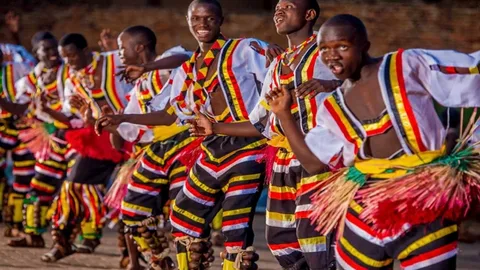
African dance traditions are not simply performances. They are living expressions of identity, history, spirituality, and community that have existed for thousands of years across one of the world’s most culturally diverse continents. Every step, rhythm, and costume carries meaning and understanding that meaning is the real key to understanding Africa itself.
What Are African Dance Traditions?
Definition of Traditional African Dance
Traditional African dance refers to indigenous dance forms practiced by African communities as part of their cultural, spiritual, and social life. These are not staged performances created for entertainment, they are functional expressions tied to specific moments in community life, from births and weddings to harvests and funerals. Each dance belongs to a specific ethnic group, carries its own symbolism, and is performed within a defined cultural context that gives it meaning.
Why Dance Is Central to African Culture
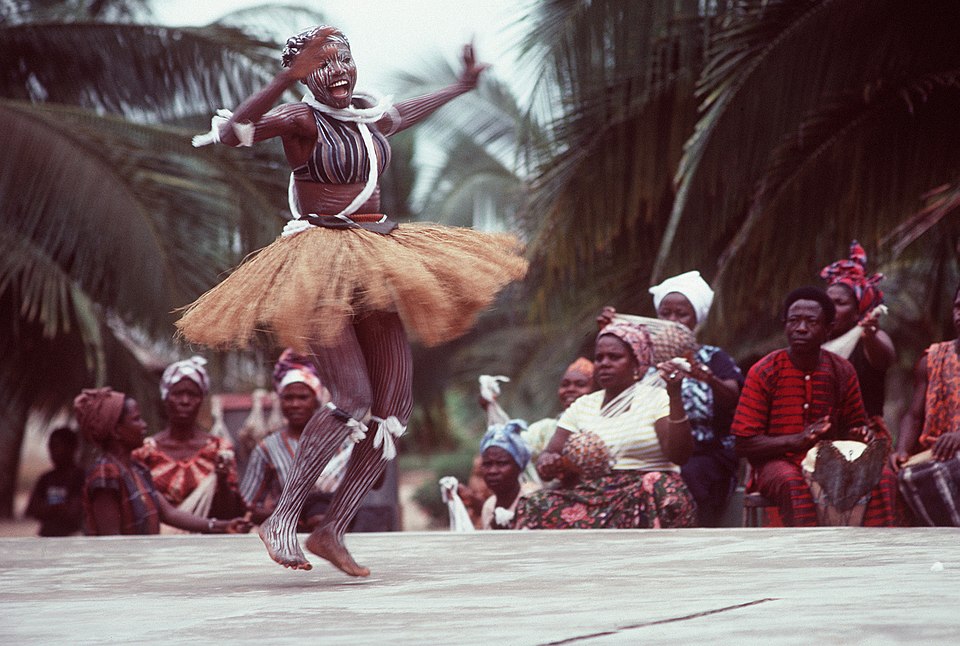
In most African societies, dance is not optional or decorative. It is one of the primary ways communities communicate, educate, celebrate, and connect with the spiritual world. Just as African music traditions function as living carriers of cultural memory, dance works alongside music as an inseparable partner in this process. You cannot fully understand one without the other. Together, they form the backbone of how African communities have expressed and preserved their identity for generations.
The History of African Dance Traditions
Ancient Origins
African dance traditions are among the oldest human activities on record. Rock paintings discovered in the Sahara Desert, dating back more than 10,000 years, depict human figures in clearly rhythmic, ceremonial movement. Ancient Egyptian reliefs show organized group dances performed at religious festivals and royal courts. The physical evidence confirms what oral traditions have always maintained that dance has been central to African life since the earliest communities formed.
Dance Before Written History
For most of African history, dance was not written down, it was lived and transmitted body to body, generation to generation. Communities passed down specific movements, rhythms, and ceremonial contexts through direct teaching and participation. This made dance one of the most resilient forms of cultural transmission in Africa, surviving colonial disruption, forced migration, and religious pressure precisely because it lived in people’s bodies rather than on paper.
Oral Tradition and Cultural Preservation
African dance has always functioned as a form of oral history in physical form. The movements of a ceremonial dance often tell a story of a battle won, an ancestor honored, a seasonal prayer offered. Griots in West Africa, for example, combined music, poetry, and movement into unified performances that served as living archives of community history. Understanding African traditions in their full depth means recognizing dance as one of the most sophisticated knowledge-preservation systems ever developed.
Evolution Across Centuries
African dance traditions have never been static. Trade routes, migrations, inter-ethnic marriages, and cultural exchanges between communities created constant evolution. The Ngoma tradition of East and Central Africa spread across the Great Lakes region through Bantu migration, adapting to each new community while retaining its core ceremonial functions. Evolution did not mean abandonment; it meant the traditions were strong enough to absorb new influences while remaining distinctly themselves.
Why Dance Is Important in African Societies
Community Identity
Dance is one of the most powerful markers of ethnic and community identity across Africa. Among the Zulu of South Africa, the Maasai of Kenya and Tanzania, and the Yoruba of Nigeria, specific dances instantly communicate who you are and where you belong. Performing a community’s dance is an act of cultural belonging, not merely artistic expression. It says: I am part of this person, I carry this history, I belong to this land.
Spiritual and Religious Purposes
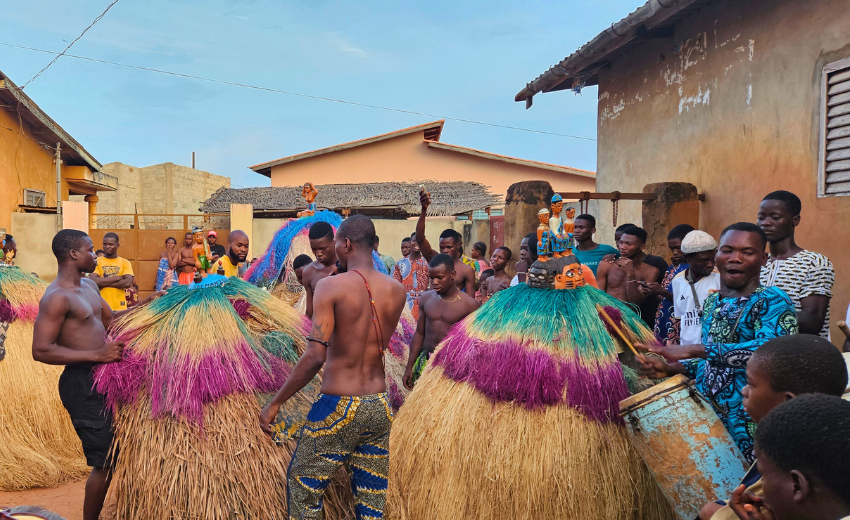
Across the continent, dance is one of the primary ways African communities communicate with ancestral spirits, deities, and unseen forces. The Egungun masquerade dances of the Yoruba in Nigeria involve elaborate costumed performances believed to embody the presence of ancestors visiting the living. Spirit possession dances in various West and Central African traditions use specific rhythms and movements to invite spiritual forces into the ceremonial space. Dance is not metaphorically spiritual in these contexts, it is understood as a literal act of communication between worlds.
Storytelling and Education
Long before classrooms, African communities’ taught history, values, and social rules through dance. Initiation dances prepare young people for adult responsibilities by physically enacting the lessons they need to carry forward. War dances teach warriors the discipline, coordination, and fearlessness required in battle. Agricultural dances teach children the rhythms of planting seasons and the gratitude owed to the earth. The body becomes the classroom, and movement becomes the lesson.
Celebrations and Festivals
Every major celebration in African communal life involves dance. Weddings, harvest festivals, the birth of a child, the return of warriors, the crowning of a new chief all of these are incomplete without specific ceremonial dances. The customs and traditions in Africa around celebration consistently place dance at the center, not the edges, of the event. To celebrate in Africa, in most traditions, is to dance.
Healing and Ritual Practices
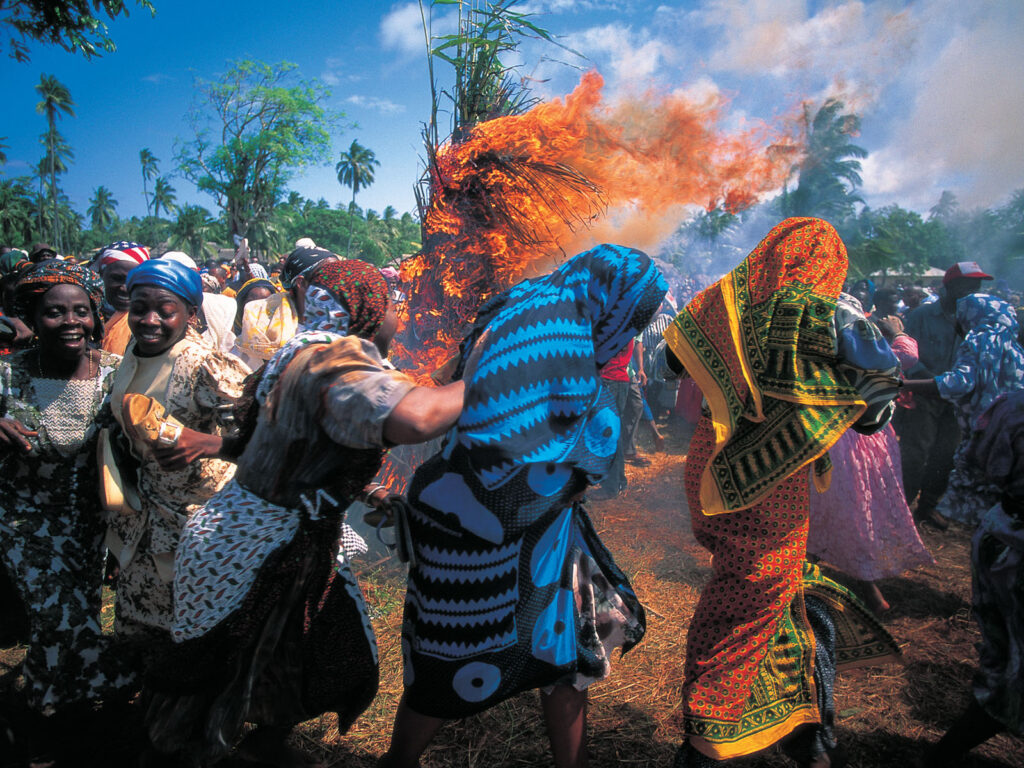
Several African dance traditions are specifically associated with physical and psychological healing. The Trance Dance of the San people in Southern Africa is one of the world’s oldest known healing rituals, in which healers enter altered states through prolonged rhythmic movement to access healing energy for community members. The Gnawa healing ceremonies of Morocco use specific dance sequences alongside music to treat conditions understood as spiritual imbalances. These traditions represent some of the world’s earliest systems of mind-body medicine.
Common Characteristics of African Dance Traditions
Rhythm and Drumming
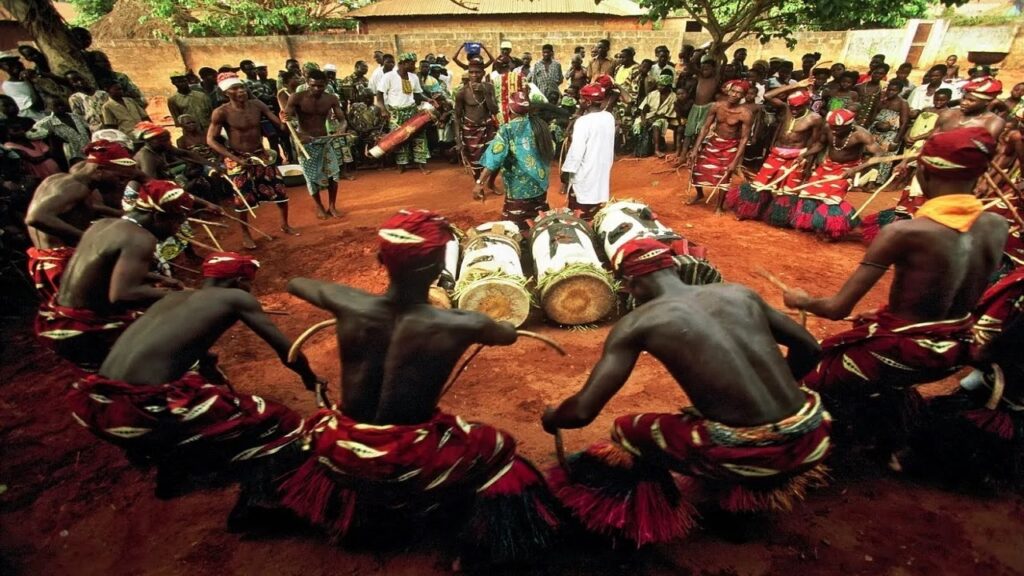
The relationship between dance and percussion in African traditions is so close that separating them is almost meaningless. Dance movements are created in direct response to specific drum rhythms, and drummers in turn respond to the movement of dancers in a live, improvisational conversation. Polyrhythmic drumming multiple rhythmic patterns layered simultaneously gives African dance its characteristic complexity, where different parts of the body may respond to different rhythmic layers at the same time.
Full-Body Movement
Unlike many Western dance forms that emphasize the feet or arms, African dance traditions engage the entire body as an expressive instrument. Shoulder isolations, hip movements, chest pops, and foot patterns all carry distinct meaning and are practiced with as much precision as any classical ballet technique. Full-body engagement reflects a philosophical position that the whole person participates in the community’s life, not just the visible or socially acceptable parts.
Call-and-Response Participation
The call-and-response structure that defines so much of African music extends directly into dance. A lead dancer or dance master performs a phrase, and the group responds with a complementary movement. This creates a communal conversation in which individual expression and group participation are constantly balanced. It also means there is rarely a sharp line between performer and audience in traditional African dance contexts.
Group Performance Culture
Most traditional African dances are designed to be performed collectively. Solo performance exists but is the exception rather than the rule. Group formations, synchronized movements, and collective energy are central to the aesthetic and spiritual power of most ceremonial dances. The individual dancer disappears into the group without losing their contribution a model of community participation that reflects African social values more broadly.
Costumes and Symbolism
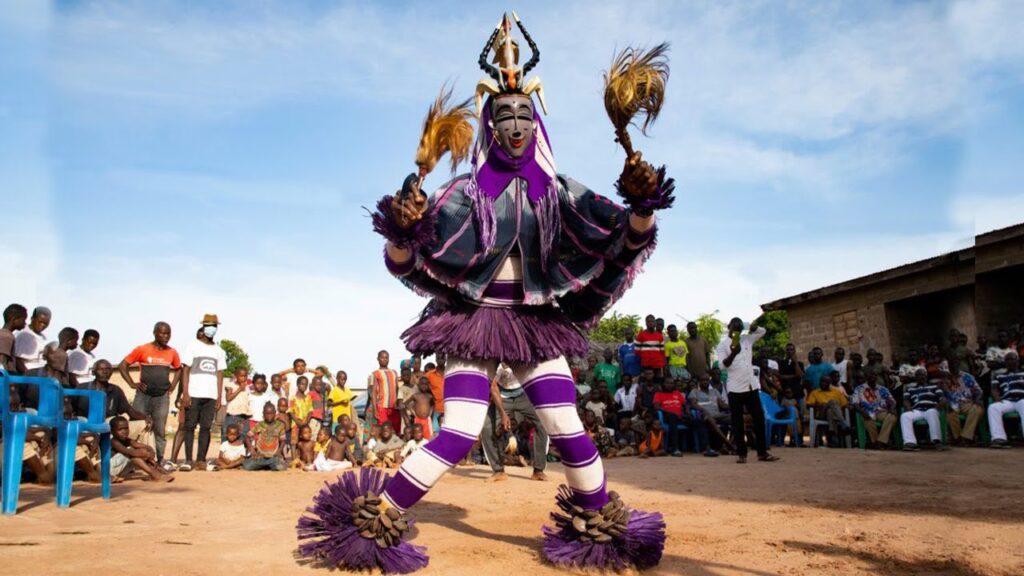
Traditional dance costumes in Africa are not merely decorative. Colors, materials, masks, and accessories each carry specific symbolic meaning tied to the purpose of the dance. The beadwork of Zulu ceremonial dress communicates social status and personal history. The elaborate masks of Côte d’Ivoire’s Zaouli dance represent spiritual forces beyond ordinary human form. Understanding what dancers wear is as important as understanding how they move.
Traditional African Dances by Region
West African Dance Traditions
West Africa has one of the world’s richest concentrations of distinct dance traditions, tied to the region’s extraordinary ethnic diversity and long history of complex kingdoms and trade networks.
Agbadza
Agbadza is a traditional dance of the Ewe people of Ghana and parts of Togo and Benin. Originally a war dance, it evolved into a ceremonial performance for celebrations and community gatherings. It is characterized by energetic footwork, rapid hip movements, and precise group coordination performed to the accompaniment of multiple drums. The dance remains one of Ghana’s most widely performed and recognized traditional forms.
Atilogwu
Atilogwu is an acrobatic folk-dance originating from the Igbo people of southeastern Nigeria. Known for its extraordinary athleticism featuring high jumps, fast spins, and gravity-defying acrobatic sequences, it is traditionally performed by young men and women and associated with festivals and community celebrations. It is one of Nigeria’s most spectacular dance traditions and has been performed internationally as a showcase of Igbo cultural identity.
Zaouli
Zaouli is a ceremonial mask dance from the Guro people of central Côte d’Ivoire. The dancer wears an elaborately carved mask representing a beautiful woman and performs extraordinarily precise footwork at high speed, with feet moving in patterns that appear almost mechanically perfect to observers. Zaouli has been recognized by UNESCO as Intangible Cultural Heritage and is considered one of the most technically demanding traditional dances in the world.
East African Dance Traditions
East African dance traditions reflect the region’s diverse ecology from the highland cultures of Ethiopia and Uganda to the coastal Swahili communities and the pastoral communities of the savanna.
Adumu
Adumu is the jumping dance of the Maasai people of Kenya and Tanzania, performed primarily by young warriors called Moran. Participants stand in a circle, taking turns jumping as high as possible from a standing position while the group chants and sings. The height of the jump is a demonstration of physical strength and warrior pride. Adumu is one of Africa’s most visually striking and widely recognized traditional dances.
Chakala
Chakala is a traditional dance of the Luo people of Kenya and Uganda, performed during celebrations, funerals, and community gatherings. It combines rhythmic footwork with energetic body movements and is accompanied by traditional Luo instruments including the nyatiti lyre. The dance serves as both entertainment and a form of communal emotional processing, particularly during mourning.
Traditional Ugandan Dances
Uganda has an extraordinarily rich dance heritage across its many ethnic groups. The Kiganda dances of the Baganda people feature precise, rapid footwork and elaborate ceremonial dress. The Bwola dance of the Acholi is a royal circle dance performed during the installation of chiefs and important community celebrations. Uganda’s cultural traditions include some of East Africa’s most visually elaborate and ceremonially complex dance forms.
Southern African Dance Traditions
Zulu Dance
Zulu ceremonial dance is one of Africa’s most powerful and widely recognized traditions. High kicks, dramatic stomping, shield and stick movements, and coordinated group formations combine to create performances of extraordinary physical intensity. Zulu dance is not merely cultural performance historically it was directly connected to warrior training, community governance, and the expression of Zulu identity under both pre-colonial kingdoms and colonial pressure. It remains a proud living tradition across KwaZulu-Natal province in South Africa.
Mbira Dance
In Zimbabwe, the mbira instrument and its associated dance tradition are inseparable from Shona spiritual practice. Bira ceremonies, which can last through the night, involve singing, mbira playing, and specific trance-inducing movements designed to invite ancestral spirits into the ceremonial space. The ancient African lifestyle of the Shona people was built around this spiritual-musical-dance complex, and it continues as a living practice for many communities today.
Horn of Africa Traditions
Eskista
Eskista is the traditional dance of Ethiopia, characterized by rolling shoulders, bouncing torsos, and fluid arm movements that create a rippling effect across the entire upper body. Unlike most African dances that emphasize the lower body and footwork, Eskista centers expression in the chest, shoulders, and neck. It is performed at celebrations, weddings, and social gatherings across Ethiopia and is one of the African continent’s most distinctive and recognizable traditional dance styles.
Famous African Traditional Dances and Their Meanings
| Dance | Country / People | Purpose | Symbolic Meaning |
| Adumu | Maasai (Kenya/Tanzania) | Warrior celebration | Strength, courage, coming of age |
| Atilogwu | Igbo (Nigeria) | Festivals, celebrations | Youth energy, community pride |
| Agbadza | Ewe (Ghana/Togo) | Ceremonies, celebrations | Originally war victory, now community joy |
| Zaouli | Guro (Côte d’Ivoire) | Spiritual ceremony | Beauty, spiritual protection |
| Eskista | Ethiopia | Weddings, celebrations | Joy, cultural identity |
| Zulu Dance | Zulu (South Africa) | Ceremonies, warrior tradition | Power, identity, cultural pride |
| Egungun | Yoruba (Nigeria) | Ancestor veneration | Ancestral presence among the living |
| Bwola | Acholi (Uganda) | Royal ceremonies | Leadership, community unity |
| Trance Dance | San (Southern Africa) | Healing ritual | Connection with healing energy |
| Mbira Dance | Shona (Zimbabwe) | Spiritual ceremony | Ancestral communication |
African Dance and Spiritual Traditions
Ancestor Veneration
Across most African spiritual systems, ancestors are not gone, they remain present and influential in the lives of the living. Dance is one of the primary ways communities’ honors, communicate with, and seek guidance from their ancestors. Specific dances are reserved exclusively for ancestral ceremonies and carry protocols about who can perform them, when, and under what conditions. Performing these dances carelessly or without cultural understanding is considered spiritually significant, not merely culturally insensitive.
Ritual Ceremonies
Ritual dances accompany the most significant transitions in African community life birth, initiation, marriage, death, and the changing of seasons. Each ritual dance has a specific purpose, specific associated music, and specific performers. Initiation dances in many Southern and East African communities are among the most closely guarded traditional forms, performed only during the relevant ceremony and taught only to those undergoing the transition they represent.
Healing Dances
The connection between dance, rhythm, and healing is one of Africa’s most remarkable contributions to human understanding of mind-body-spirit integration. The San Trance Dance of the Kalahari, practiced for an estimated 70,000 years, uses prolonged rhythmic movement to activate what practitioners describe as healing energy that can be directed toward sick community members. Modern neuroscience has begun to document the altered brain states that these practices produce, lending contemporary scientific interest to some of the world’s oldest healing traditions.
Sacred Performances
Some African dance traditions are explicitly sacred and not intended for public or tourist consumption. These performances are part of closed ceremonial systems with deep spiritual significance for the communities that practice them. Respecting these boundaries is part of engaging authentically with African cultural heritage, and it is an important distinction for travelers, researchers, and cultural enthusiasts to understand.
How African Dance Influenced Global Culture
Influence on Jazz
The syncopated rhythms, improvised movement, and call-and-response physical dialogue of jazz dance trace directly back to African movement traditions carried across the Atlantic by enslaved Africans. The Charleston, the Lindy Hop, and the foundations of American social dance all carry the physical grammar of West African ceremonial and social dance. When jazz dancers “cut” at each other in competitive improvisation, they are recreating a dynamic fundamental to African dance culture.
Influence on Hip-Hop
Breaking, popping, locking, and the broader physical vocabulary of hip-hop dance are deeply rooted in African movement traditions. The isolation of body parts, the foundational technique of most American vernacular dance styles is a direct inheritance from African dance traditions that treat each part of the body as a distinct expressive instrument. The cipher, hip-hop’s circle of dancers taking turns to freestyle, mirrors the circle formations and call-and-response structures of African communal dance.
Influence on Afrobeat Movement
Modern Afrobeats has created an entirely new global dance culture rooted in West African movement traditions. The wide stance, grounded posture, and rhythmically complex hip and shoulder movements that characterize Afrobeats dance are directly descended from Yoruba, Igbo, and Ghanaian traditional dance forms. African music artists driving the global Afrobeats movement are, in many cases, consciously reconnecting to traditional movement vocabularies while translating them for contemporary audiences.
Contemporary Dance Connections
Some of the world’s most respected contemporary choreographers have built entire careers on deep study of African movement traditions. Companies like Alvin Ailey American Dance Theater embedded African-derived movement into concert dance in ways that permanently changed what Western audiences understood dance to be. Today, African contemporary dance companies from Senegal, South Africa, and Burkina Faso are internationally touring, bringing the full depth of African movement traditions into dialogue with global contemporary performance.
Preserving African Dance Traditions in Modern Times
Cultural Institutions
Dance schools, cultural centers, and national performance companies across Africa are working to document, teach, and stage traditional dance forms for new generations. Nigeria’s National Troupe, Ghana’s National Dance Company, and similar institutions in Zimbabwe, Senegal, and Ethiopia maintain professional companies dedicated to preserving and presenting traditional forms while keeping them alive and evolving.
Festivals
Pan-African cultural festivals play a vital role in preservation by bringing traditional dance companies together in contexts that celebrate rather than museumify living traditions. The Festival on the Niger in Mali, the Calabar Festival in Nigeria, and the Umhlanga Reed Dance in Eswatini are examples of large-scale events that maintain traditional dance as a living community practice rather than a historical artifact.
Digital Preservation
Ethnochoreographers, documentary filmmakers, and cultural organizations are increasingly using video archives to document traditional dances before their primary practitioners pass on. The Smithsonian, various African universities, and independent researchers are building digital archives of dance traditions that were previously transmitted only through direct embodied teaching. This work is urgent and it is one of the most important forms of cultural preservation happening on the continent today.
Youth Education
The most durable form of preservation is transmission to young people who carry traditions forward not as museum pieces but as living practice. Community dance programs, school curriculum integration, and youth cultural festivals across Africa are ensuring that young Africans grow up with embodied knowledge of their ancestral movement traditions. When a young Maasai warrior learns Adumu, or a young Ghanaian woman learns Agbadza, the tradition survives in the most meaningful possible way.
Frequently Asked Questions
What are African dance traditions?
African dance traditions are indigenous dance forms practiced by African communities as part of their cultural, spiritual, social, and ceremonial life. They vary significantly by region and ethnic group, each carrying specific symbolism, purpose, and performance context tied to the community that created them.
Why is dance important in African culture?
Dance in African culture serves as communication, education, spiritual practice, and community identity marker simultaneously. It accompanies every major life transition, connects communities with their ancestors, teaches social values, and preserves historical memory in physical form. It is not separate from daily life; it is woven into its most significant moments.
What are the most famous traditional African dances?
Among the most widely recognized are Adumu (Maasai jumping dance), Atilogwu (Igbo acrobatic dance from Nigeria), Zaouli (Guro mask dance from Côte d’Ivoire), Eskista (Ethiopian shoulder dance), and Zulu ceremonial dance from South Africa. Each is distinct in style, purpose, and cultural context.
How did African dance influence global dance culture?
African dance traditions, carried across the Atlantic through the slave trade, formed the foundational movement vocabulary of jazz dance, blues dancing, and eventually hip-hop. Latin dance forms including samba and rumba also carry direct West and Central African movement influences. Modern Afrobeats dance continues this global transmission in the streaming era.
Are African dances religious?
Many African dances have spiritual or religious dimensions, they are used to honor ancestors, communicate with spiritual forces, facilitate healing, or mark sacred transitions. However, not all African dances are religious. Many are social, celebratory, or educational. The distinction between sacred and social varies by community and tradition.
How are African dance traditions preserved today?
Preservation happens through national dance companies, community schools, cultural festivals, academic documentation, digital archiving, and perhaps most importantly, through young people learning traditional dances from older community members in living transmission. The most meaningful preservation is always the one that keeps traditions in living, practicing communities rather than archives alone.
Key Takeaways
- African dance traditions are thousands of years old and serve social, spiritual, educational, and ceremonial functions simultaneously
- Africa’s dance traditions are extraordinarily diverse; each ethnic group and region has its own distinct forms, meanings, and performance contexts
- Dance in Africa is inseparable from music, community, and spirituality; it is not merely entertainment
- Famous traditions include Adumu, Atilogwu, Zaouli, Eskista, and Zulu dance, each carrying deep cultural meaning
- African dance directly shaped jazz, hip-hop, Latin dance, and contemporary Afrobeats movement worldwide
- Preservation efforts through festivals, education, and digital archiving are keeping these traditions alive for future generations
- Engaging respectfully with African dance means understanding its cultural context, not just its visual spectacle
Explore More African Cultural Heritage
African dance traditions are one entry point into a cultural world of extraordinary depth and diversity. From the instruments that accompany every ceremony to the clothing worn by performers, from the spiritual systems that give dance its meaning to the historical forces that shaped its evolution, every thread leads deeper into the richness of African heritage.
Explore more at ILoveAfrica.com and discover the full story of the continent’s living traditions, histories, and communities.

