
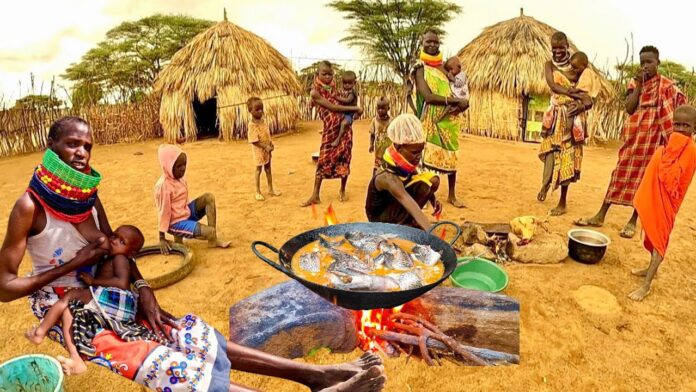
African village life is one of the most misrepresented subjects in global media. The images most people carry of poverty, isolation, and unchanging tradition miss the reality almost entirely. Across the continent, rural African communities are dynamic, culturally rich, and increasingly connected to the modern world in ways that challenge every outdated assumption. This guide offers an honest, comprehensive picture of what African village life looks like today.
What Is African Village Life?
Defining Rural African Communities
An African village is a rural settlement built around shared land, kinship ties, and communal values. Village sizes range from a few dozen households to several thousand people, depending on the region, history, and available resources. What distinguishes a village from a town is not simply size; it is the density of social relationships, the centrality of agriculture and livestock to daily economic life, and the degree to which traditional governance, cultural practice, and ancestral identity shape community decisions.
Diversity Across the Continent
Africa has over 54 countries and thousands of distinct ethnic communities, each with its own village traditions, architectural styles, governance systems, and cultural practices. A Maasai manyatta in Kenya looks nothing like a Yoruba compound in Nigeria, which looks nothing like a Swahili stone village on the Zanzibar coast. Understanding African traditions and community life means starting with the recognition that “African village life” is an umbrella covering extraordinary diversity, not a single uniform experience.
A Typical Day in an African Village
Morning Activities
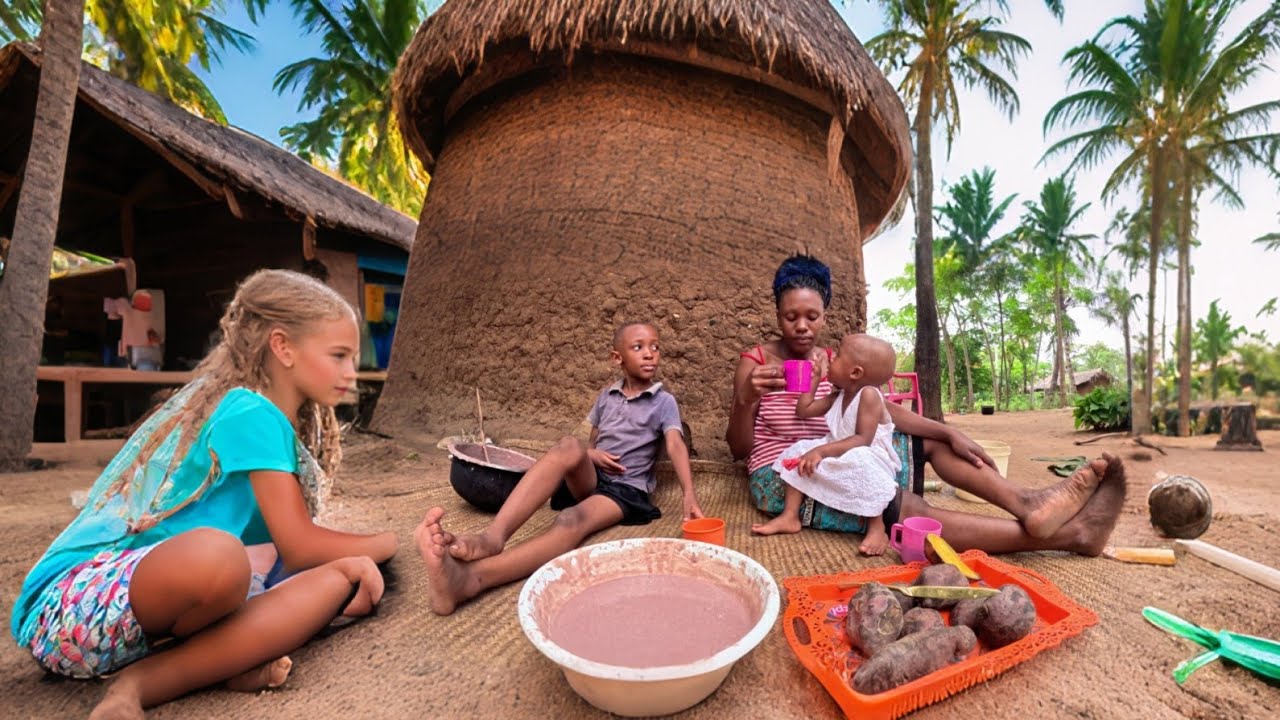
Dawn in most African villages begins before the sun rises fully. Women typically start fires for cooking and begin preparing the morning meal while children fetch water from nearby sources a river, a borehole, or increasingly a community tap. Men begin preparing for the day’s primary work, whether that means organizing farming tools, checking on livestock, or planning a market trip. The morning meal, eaten together as a family or household, is one of the day’s anchoring social moments.
Farming and Livestock Care
The core economic activity in most rural African communities is farming and livestock keeping. Mornings after breakfast are devoted to agricultural work, weeding, planting, harvesting, or preparing land depending on the season. Livestock cattle, goats, sheep, and chickens require daily feeding, watering, and management. Among pastoralist communities like the Maasai of East Africa, young men take cattle to grazing areas at dawn and return at dusk, structuring the entire day around the animals’ needs.
Community Responsibilities
Midday brings a pause from heavy outdoor work, particularly in the hottest months. This is often a time for community gatherings elders convening to discuss village matters, women meeting at shared water points, young people gathering at the village center. Community responsibilities maintaining shared infrastructure, caring for elderly or sick neighbors, preparing for upcoming ceremonies are woven into the day alongside personal household tasks. African village life operates on the understanding that individual wellbeing is inseparable from community wellbeing.
Evening Social Life
Evening is when African village life becomes most richly social. After the day’s work and the evening meal, families and neighbors gather on compound verandas, around fires, or in the open space at the center of the village. Elders tell stories. Children play. Adults discuss the day’s events, make decisions about community matters, and maintain the dense web of social relationships that holds village life together. African music traditions fill many of these evenings, with drumming, singing, and informal dance marking celebrations, seasonal moments, and ordinary social gathering alike.
Traditional Homes and Village Layouts
Types of Housing
African village housing varies dramatically by region, climate, and cultural tradition. Round mud-walled, thatched-roof structures are common across sub-Saharan Africa and represent one of the world’s most effective low-cost, climate-appropriate building technologies. Rectangular mud-brick houses with corrugated metal roofs have replaced thatch in many communities as a marker of prosperity. In West Africa’s Sahel region, flat-roofed earthen construction adapted to dry climates. East African Swahili stone architecture blends African, Arab, and Indian design traditions into a distinct coastal style.
Building Materials
Traditional building materials are locally sourced and ecologically appropriate. Red clay soil mixed with water and grass makes highly effective and thermally efficient wall material. Wooden frames support thatched roofs made from grass, palm leaves, or reeds. In forest regions, bamboo and timber construction are common. The knowledge of how-to source, prepare, and construct with these materials is itself a significant body of indigenous technical knowledge that communities have refined over generations.
Family Compounds
The compound a group of related structures enclosed within a shared boundary is the fundamental unit of physical settlement in most African village traditions. A compound typically houses an extended family: parents, adult children and their spouses, grandchildren, and sometimes other relatives. Shared cooking space, shared granaries, and a shared entrance create daily physical proximity that reinforces the social bonds of the extended family. The compound is simultaneously a family home, an economic unit, and a ceremonial space where births, marriages, and deaths are marked.
Village Organization
Villages typically organize around a central meeting space a large tree, a cleared ground, or a dedicated structure where community decisions are made and ceremonies are held. Residential areas radiate outward from this center, with compounds arranged by clan or lineage in many traditions. Sacred spaces, shrines, ancestral graves, or sacred groves are typically located at significant points in the village geography, and their maintenance is a community responsibility.
Family and Community Structure
Extended Families
The extended family is the foundation of African village social organization. Where Western households typically consist of parents and their children, African village households encompass grandparents, aunts, uncles, cousins, and sometimes more distant relatives sharing resources, childcare, labor, and decision-making. This structure provides social security for the elderly who are cared for within the family, children are raised by multiple adults, and economic hardship is cushioned by the collective. It also creates expectations of contribution and reciprocity that govern social behavior throughout a person’s life.
Role of Elders
Elders hold social authority in African village communities that has no direct equivalent in most Western contexts. They are the living repositories of community knowledge historical memory, agricultural wisdom, conflict resolution techniques, ceremonial knowledge, and the interpretation of traditional law. Major community decisions allocation of land, resolution of disputes, timing of ceremonies are made with elder input and frequently require elder consensus. Respect for elders is not mere politeness; it is the acknowledgment that accumulated knowledge and experience are the community’s most valuable resources.
Community Cooperation
African village economies run on cooperation. Communal farming arrangements where neighbors collectively work in each other’s fields in rotation reduce the burden on individual families and create webs of mutual obligation that strengthen social bonds. Building a new house, preparing for a major ceremony, and responding to a family’s crisis all typically involve the community mobilizing collective resources and labor. The Bantu concept of Ubuntu “I am because we are” describes this communal identity not as a philosophical abstraction but as the practical operating principle of daily village life.
Leadership Systems
Traditional village leadership in Africa combines hereditary authority with community accountability in ways that vary significantly by ethnic group. Chiefs and headmen typically come from specific lineages but must govern with the consent and guidance of elder councils. Village decisions are often made through consensus processes that require broad community agreement rather than simple majority rule. These governance systems are sophisticated political institutions, not informal arrangements, they have maintained community order across generations and continue to function alongside formal government structures in most African countries.
Agriculture and Village Economies
Subsistence Farming
The majority of rural African households practice subsistence farming growing food primarily for household consumption rather than commercial sale. Crops vary by region: maize, sorghum, and millet dominate in much of sub-Saharan Africa; cassava is central in Central and West Africa; teff and enset are staples in Ethiopia; rice in coastal West Africa and Madagascar. Subsistence farming is not primitive; it represents millennia of accumulated knowledge about local soils, rainfall patterns, seed selection, and crop rotation that has sustained populations through variable climate conditions.
Livestock Keeping
Livestock cattle, goats, sheep, chickens, and in some region’s camels or donkeys provide protein, dairy products, transportation, agricultural labor, and, crucially, social currency. In many African traditions, cattle represent stored wealth, social status, and the material basis for important ceremonies including marriage negotiations. Livestock keeping and crop farming are typically integrated, with animals providing manure for fields and crop residues providing animal feed in systems that are far more sophisticated than their low-tech appearance suggests.
Local Markets
Village markets are the economic and social heartbeat of rural African communities. Periodic markets held weekly or every few days at a designated location draw vendors and buyers from surrounding villages, creating dense exchange networks for food, livestock, craft goods, and increasingly manufactured items. Markets are also powerful social spaces where information is exchanged, relationships are maintained, and community life is expressed through commerce. The expansion of mobile money platforms like M-Pesa in East Africa has integrated village markets into digital financial systems without displacing their fundamentally social character.
Small Businesses
Village economies are increasingly diversified beyond pure subsistence farming. Small shops selling basic goods, mobile phone charging services, tailoring, motorcycle taxi services, and food preparation businesses have become important income sources for rural households. Women’s savings cooperatives rotating credit systems called susu in West Africa or chama in East Africa provide access to investment capital outside formal banking systems. Rural entrepreneurship is not new in Africa; what is changing is its scale and connectivity to broader markets.
Food and Traditional Cuisine
Common Staple Foods
African village food is built around starchy staples eaten with flavorful sauces, stews, or relishes. Ugali (Kenya, Tanzania), fufu (West and Central Africa), injera (Ethiopia), nsima (Malawi), and sadza (Zimbabwe) are thick, cooked porridges or flatbreads made from maize, cassava, sorghum, or teff that form the bulk of most meals. These are paired with vegetable stews, legume dishes, and when available, meat or fish. The flavoring of sauces using local spices, palm oil, groundnuts, tomatoes, and leafy vegetables is where the real culinary diversity lives. Exploring traditional African food reveals a cuisine of extraordinary regional variety built on principles of whole-food cooking and maximum flavor from simple ingredients.
Cooking Methods
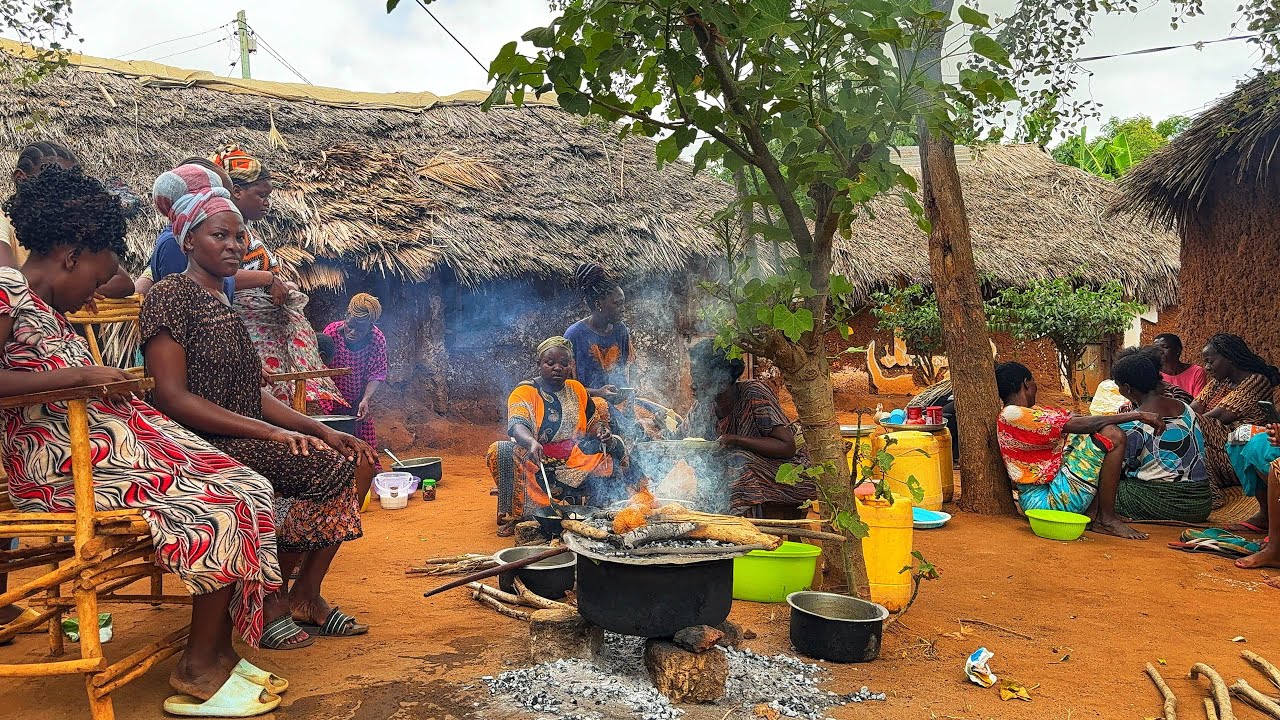
Traditional African cooking happens primarily over open fires using clay pots, iron pans, and wooden utensils. Three-stone fires, two rocks and a third stone supporting a cooking pot directly over burning wood remain the most common cooking technology in rural Africa, used by hundreds of millions of people daily. Smoking, fermenting, sun-drying, and roasting are traditional preservation methods that extend the shelf life of food in environments without refrigeration. These methods produce distinctive flavors smoked fish, fermented locust beans, sun-dried tomatoes, roasted groundnuts that are central to the taste identity of regional African cuisines.
Community Meals
Food in African village culture is fundamentally communal. Preparing large quantities and sharing with neighbors, relatives, and visitors is a social norm, not an exceptional act of generosity. A visitor arriving at mealtimes will almost always be invited to eat. Ceremonies and celebrations are organized around communal feasting that can feed hundreds of people. The sharing of food is one of the most basic expressions of the communal values that define African village life hospitality is not a performance, it is a cultural obligation.
Culture, Traditions and Customs
Storytelling
Storytelling is one of African village culture’s most important educational and entertainment traditions. Evenings around the fire are the traditional setting for folktales, historical narratives, moral fables, and accounts of community history told by elders to children and adults alike. These stories are not simply entertainment, they encode moral values, explain natural phenomena, preserve historical memory, and transmit community identity across generations. The griot tradition of West Africa, in which specialist storyteller-musicians serve as living archives of community history, is the most developed form of a storytelling tradition found across the entire continent.
Music and Dance
Music and African dance traditions are inseparable from village life. Work songs accompany farming, grinding, and communal labor. Lullabies structure infant care. Ceremonial music marks every major community event. Informal drumming, singing, and dancing fill social evenings. Each ethnic community has its own musical tradition specific instruments, rhythms, and song forms tied to specific occasions and social functions. Music in African villages is not background noise; it is one of the primary ways communities process experience, express identity, and maintain social bonds.

Festivals
Annual festivals mark the agricultural calendar, honor ancestors, celebrate community identity, and provide occasions for the elaborate expression of cultural traditions across Africa. Harvest festivals give thanks for food security. First fruits ceremonies seek ancestral blessing for the coming season. New year celebrations and historical commemorations reinforce community memory and identity. These are not tourist spectacles; they are living institutions that organize community time, distribute resources through ceremonial feasting, and maintain the social relationships that hold village life together throughout the year.
Marriage Traditions
Marriage in African village communities is a negotiation between families as much as a union between individuals. Bride wealth payment from the groom’s family to the bride’s family formalizes the alliance between lineages and has deep social and spiritual significance. Wedding ceremonies typically extend over multiple days and involve the entire community in celebration, feasting, and ceremony. Traditional African wedding attire is among the most elaborate and culturally expressive clothing produced in any tradition, with every element of dress carrying specific meaning about the families being united.
Traditional Beliefs
African village life remains deeply connected to traditional spiritual practices even where Christianity and Islam are the nominally dominant religions. Ancestral veneration, consultation with traditional healers, ceremonies marking agricultural seasons, and the maintenance of sacred sites continue as living practices woven into daily life. The relationship between traditional spirituality and imported religions is typically syncretic rather than mutually exclusive, a farmer may pray at a church on Sunday and pour libation for his ancestors on Monday without experiencing these as contradictory practices.
Education in African Villages
Village Schools
Primary school access has expanded dramatically across rural Africa over the past three decades, and most African villages now have schools within walking distance. Enrollment rates have improved significantly, though completion rates particularly for girls remain a challenge in many regions. Village schools are often central community institutions, serving as gathering spaces, voter registration centers, and sometimes healthcare delivery points beyond their educational function. Teachers in rural schools are frequently among the most educated and respected members of village communities.
Challenges and Progress
Distance to secondary schools remains a barrier for many rural students, particularly girls, for whom boarding school requires family resources and creates safety concerns that prevent enrollment. Mobile learning platforms, radio schools, and community learning centers are expanding educational access beyond fixed school infrastructure. Youth literacy rates across sub-Saharan Africa have improved dramatically since the 1990s, and many villages now have young adults with secondary and even tertiary education, a generational shift in educational attainment that is transforming village economies and social structures simultaneously.
Healthcare and Wellbeing
Traditional Medicine
Traditional healing remains the first point of contact for health concerns in most African village communities. Traditional healers’ herbalists, diviners, and spiritual healers provide accessible, affordable, and culturally appropriate care that addresses both physical symptoms and their perceived spiritual or social causes. African traditional medicine is not merely superstition, it includes an extensive pharmacopoeia of plant-based treatments, many of which have been validated by biomedical research. The World Health Organization estimates that up to 80 percent of people in some African countries use traditional medicine as their primary healthcare.
Modern Healthcare Access
Government health clinics and community health workers have significantly expanded biomedical healthcare access in rural Africa, though quality and supply chain reliability remain inconsistent challenges. Mobile health clinics bring services to remote communities. Community health worker programs train village residents to provide basic health education, maternal care, and disease monitoring at the household level. The most effective rural health systems combine traditional and biomedical approaches working with rather than against traditional healers to improve overall community health outcomes.
Technology and Modern Changes
Mobile Phones
Mobile phone penetration has been Africa’s most transformative technology adoption of the past two decades, and it reaches deep into rural villages. Farmers use mobile phones to check market prices before selling crops, preventing exploitation by middlemen. Families use mobile money transfers to send funds between rural and urban households instantly. Health workers use phones to report disease outbreaks and receive updated treatment guidelines. The smartphone is reshaping village economies, information access, and social communication in ways that were unimaginable a generation ago.
Solar Energy
Solar power has brought electricity to millions of African village households that are unlikely to be reached by grid infrastructure soon. Small solar home systems panels, battery, LED lights, and USB charging ports have transformed evening life into villages where people previously went to sleep in the dark or burned expensive, smoky kerosene lamps. Solar-powered phone charging businesses have become village entrepreneurship opportunities. Community solar microgrids are powering village schools, health clinics, and small businesses in an energy transition happening faster in rural Africa than in many developed country narratives suggest.
Internet Access
Smartphone internet access, driven by affordable mobile data plans and widespread 4G network expansion, is bringing rural African villages into the global information economy at accelerating speed. Young people in villages are accessing educational content, watching international media, engaging with global communities, and developing digital skills that expand their economic options beyond traditional village livelihoods. This connectivity is bidirectional village communities are also sharing their cultures, practices, and perspectives with global audiences in ways that challenge the one-directional flow of information that defined earlier generations of media.
Rural Innovation
African villages are sites of remarkable practical innovation. Farmers are developing climate-adapted crop varieties and water management techniques in response to changing rainfall patterns. Youth entrepreneurs are applying digital tools to agricultural supply chains, healthcare logistics, and rural financial services. Community-led renewable energy projects are expanding beyond solar to include biogas from agricultural waste. The image of African villages as passive recipients of outside development aid misses the reality of vibrant, problem-solving communities continuously adapting to their circumstances with creativity and indigenous knowledge.
Challenges Facing African Villages
Poverty
Rural poverty remains the most pressing challenge in African village communities. Low agricultural productivity, limited market access, and minimal formal employment opportunities constrain household incomes across large portions of rural Africa. Climate variability, including increasingly unpredictable rainfall and more frequent drought events undermines agricultural systems that have refined over generations, creating food insecurity in communities where many people grow their own food.
Climate Change
Climate change is hitting rural African communities with severity. Farmers who have planted traditional seasonal calendars for generations are finding those calendars no longer reliable. Pastoralist communities are experiencing the degradation of grazing land. Fishing communities face changing fish populations in lakes and rivers affected by warming temperatures. Communities that contribute the least to global greenhouse gas emissions are bearing disproportionate consequences, one of the most acute environmental justice challenges of the current era.
Infrastructure
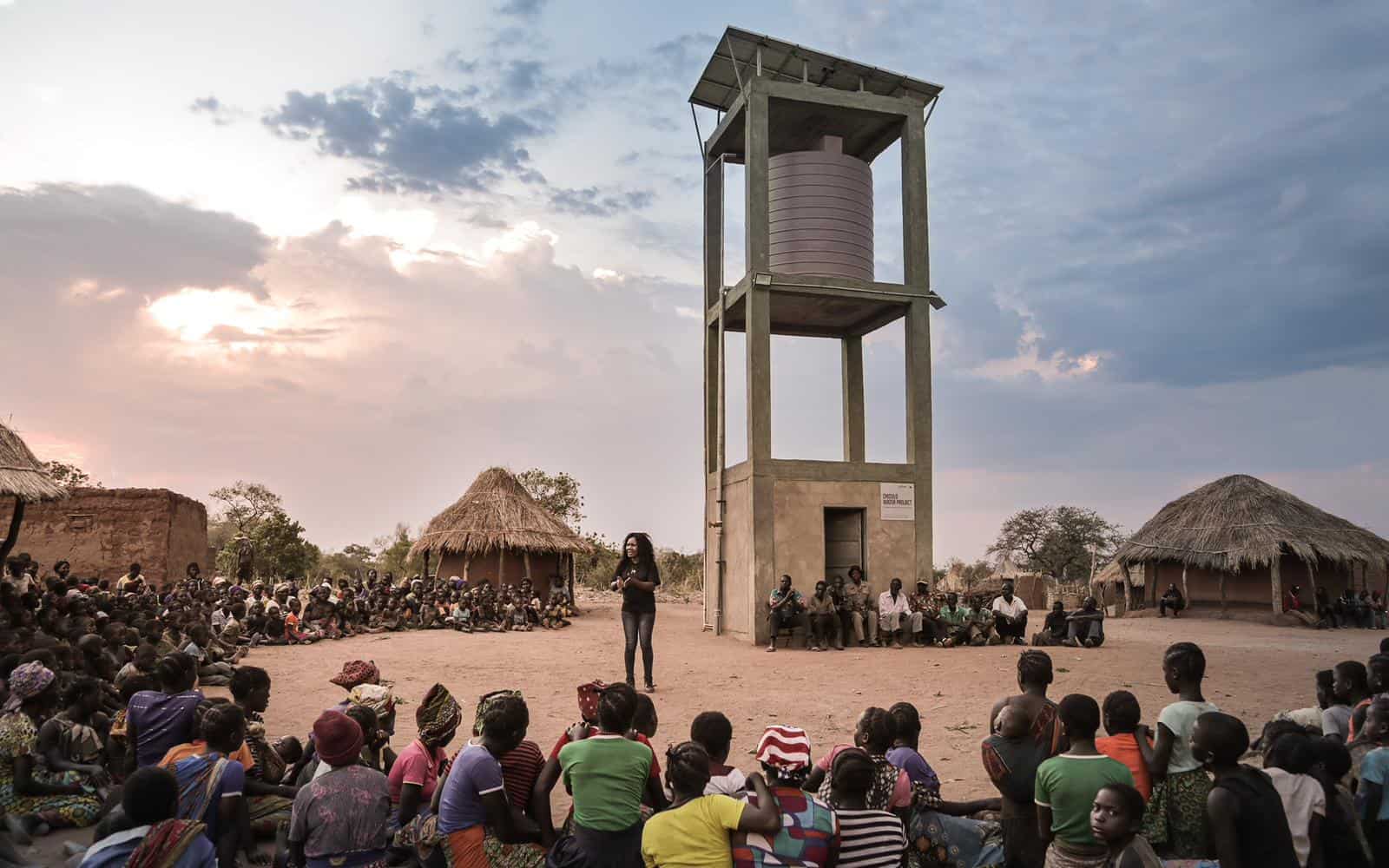
Road quality, electricity access, clean water supply, and internet connectivity remain significantly weaker in rural Africa than in urban areas, limiting economic development and service delivery. Poor roads mean that farmers cannot reliably transport produce to markets when roads become impassable in rainy seasons. Unreliable electricity limits the development of productive village enterprises. Clean water access remains a daily challenge in many communities, consuming hours of productive time disproportionately from women and girls in its collection.
Migration
Rural-to-urban migration is drawing young people away from African villages at accelerating rates, creating communities with aging populations and labor shortages in agriculture. This migration is economically rational urban areas offer more economic opportunity than many rural communities, but it creates social and economic stresses in villages that lose their most economically productive members. The remittances that migrants send home partially compensate for lost labor, but they cannot replace the community participation and cultural transmission that accompanies physical presence.
African Village Life vs Urban Life
| Dimension | Village Life | Urban Life |
| Community bonds | Strong extended family, daily neighbor interaction | Weaker community ties, nuclear family focus |
| Economic base | Farming, livestock, small trade | Formal employment, services, industry |
| Housing | Compound living, mud brick or traditional materials | Apartment or formal housing, higher density |
| Cultural practice | High — ceremonies, traditional governance active | Reduced, though not absent |
| Cost of living | Lower monetary costs, higher labor demands | Higher monetary costs, lower labor demands |
| Access to services | Limited healthcare, schools, internet | Better access to formal services |
| Pace of life | Seasonal rhythms, slower pace | Fast-paced, time-pressured |
Benefits and Drawbacks
Village life offers food security for households that farm successfully, strong social support networks, low monetary cost of living, and a rich cultural environment. Its challenges include limited formal employment, restricted access to healthcare and education services, and exposure to the economic consequences of poor harvests. Urban life offers economic diversity and service access while introducing the social isolation, high costs, and cultural disruption that accompany departure from community networks. Most African families strategically maintain presence in both environments.
Frequently Asked Questions
What is daily life like in an African village?
Daily village life centers on farming, family responsibilities, and community interaction. Mornings begin early with cooking, water collection, and agricultural work. Midday brings community gathering and rest from heavy labor. Evenings are social, with families and neighbors gathering for meals, storytelling, music, and discussion. The rhythm of village life follows seasonal agricultural cycles more than clock-based schedules.
What types of houses are found in African villages?
Housing varies significantly by region. Round mud-walled, thatched-roof structures are common across sub-Saharan Africa. Rectangular mud-brick houses with metal roofs are increasingly common as markers of prosperity. West African compounds group multiple family structures within a shared boundary. Swahili stone architecture appears on the East African coast. Each building tradition reflects local climate, available materials, and cultural preferences developed over generations.
Do African villages have electricity and internet?
Increasingly yes, though access remains uneven. Solar home systems have brought electricity to millions of village households without grid connection. Mobile phone penetration is high across most of rural Africa, and 4G mobile data has expanded internet access dramatically. Villages near urban centers or on major roads typically have better connectivity than remote communities, but the technology gap between rural and urban Africa is narrowing faster than most global observers recognize.
What crops are grown in African villages?
Staple crops vary by region. Maize is the most widely grown crop across sub-Saharan Africa. Cassava dominates Central and West Africa. Sorghum and millet are important in drier Sahel regions. Teff is Ethiopia’s primary grain. Rice is significant in coastal West Africa. Most village farmers grow multiple crops including vegetables, legumes, and fruit alongside staple grains, supplemented by livestock products.
What role do elders play in African village life?
Elders are the primary repositories of community knowledge and the central authority in traditional village governance. They mediate disputes, guide major community decisions, maintain ceremonial knowledge, and transmit cultural heritage to younger generations. Respect for elders is a fundamental social value not mere custom but a recognition that accumulated experience and wisdom are community resources that younger people lack and need access to.
Discover More About African Culture and Heritage
African village life is where much of the continent’s cultural heritage is most alive in the storytelling, the ceremonies, the agricultural wisdom, and the community governance systems that have sustained African communities for thousands of years. Understanding means understanding Africa itself, not as a problem to be solved but as a civilization with deep roots, remarkable resilience, and much to teach the wider world.
Explore more at ILoveAfrica.com to go deeper into the traditions, histories, and living cultures of Africa’s extraordinary communities.

